Note: Daily insights are temporarily exclusive to https://finrearchersol.qzz.io/ for a limited time. Please be aware that historical data may be permanently removed following this period.
Updated on Dec 30th 2026
Precious Metals Market Plummets! Gold Falls Below $4,350, Silver Crashes 10% as Year-End Profit-Taking Triggers Massive Sell-Off
After reaching record highs, the precious metals market took a sharp downturn at the end of the year. The simultaneous collapse of gold and silver prices has sparked intense debate over whether this is a short-term correction or a fundamental trend reversal.
Precious Metals Market Under Pressure
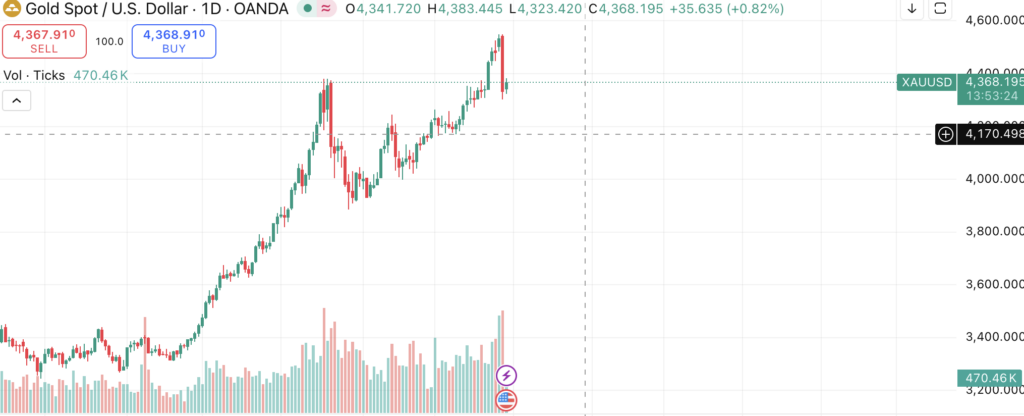
Following a rapid surge last week that refreshed all-time highs, the precious metals market finally faced a significant correction today (Dec 29th). Influenced by a confluence of factors, prices for gold, silver, platinum, and palladium crashed simultaneously. The market sentiment shifted quickly from euphoria to caution, resulting in a rare year-end “high-altitude plunge.”
According to the latest TradingView data:
- Gold: Spot prices retreated rapidly from an all-time high near $4,500 per ounce, dipping to approximately $4,332.53, a single-day drop of about 4.39%. Despite this sharp correction, gold’s total gain for 2025 remains between 65% and 72%, marking its best annual performance since 1979.
- Silver: The correction was even more violent. After hitting a record high between $83.62 and $84 per ounce, prices plummeted to a low of $71.90 – $73.71, a single-day crash of 7.9% to 9.11%. However, silver’s total 2025 return still stands at roughly 150% to 181%, significantly outperforming gold.
- Other Metals: Platinum fell from a high of $2,478 to the $2,094 – $2,157 range (down ~12%). Palladium dropped by about $328 to settle near $1,594.
Why Such a Drastic Correction?
Market analysts generally believe this crash was amplified by low liquidity.
- Massive Year-End Profit-Taking: Precious metals accumulated huge gains in the second half of 2025. As prices strayed far from their moving averages, the year-end deadline triggered a wave of profit-taking, leading to concentrated selling pressure.
- Thin Liquidity: Lower trading volumes during the holiday season meant that even mid-sized sell orders had a disproportionate impact on price volatility.
- Cooling Geopolitical Tensions: A perceived temporary decrease in geopolitical risks weakened the immediate support from safe-haven buying.
Analysts: Correction Does Not Alter Long-Term Bullish Structure
Despite the short-term turbulence, many analysts remain bullish for 2026.
- Kitco Metals (Jim Wyckoff): Suggests that from a technical standpoint, this is merely “mild” profit-taking. The primary uptrend remains intact, and silver’s supply constraints haven’t changed.
- J.P. Morgan: Expects central bank demand for gold to remain high through 2026, providing a solid price floor.
- Goldman Sachs: Has raised its December 2026 gold price target to $4,900 per ounce, arguing that upside risks still outweigh the downside.